Blogs

All Success Stories Wedding Tips Relationship Advice Horoscope Compatibility

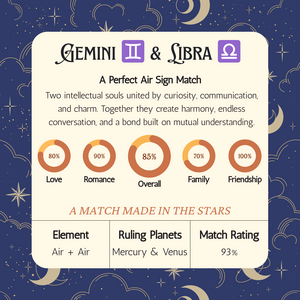
Gemini and Libra - A Beautiful Balance of Minds

Horoscope compatibility
Gemini and Libra create a relationship filled with laughter, conversation, and effortless connection. Both are air signs, making communication their strongest asset. From the beginning, they enjoy each other’s company. Gemini brings excitement and curiosity, while Libra adds charm and balance. In love, they are playful and expressive. They understand each other’s need for freedom and space, which keeps the relationship fresh. Romance is light, fun, and creative. Dates are exciting, and conversations never run out. Family life may require effort, as both can avoid responsibilities at times. However, with balance, they can create harmony. As friends, they are inseparable. Their bond often starts as friendship before turning into love.
Read Full Story →

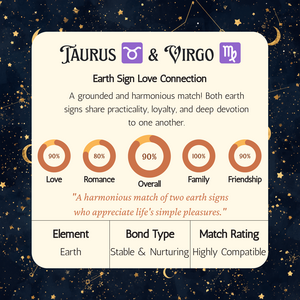
Taurus and Virgo - The Most Grounded Love Story

Horoscope compatibility
Taurus and Virgo share a natural connection that feels calm, secure, and deeply comforting. Both are earth signs, which means they value stability, loyalty, and long term commitment. This relationship grows slowly but strongly. Taurus brings emotional warmth and consistency, while Virgo adds thoughtfulness and attention to detail. Together, they create a bond that feels safe and dependable. In love, Taurus is affectionate and steady, while Virgo expresses love through care and actions. Their styles may differ, but they complement each other beautifully. Romance here is not overly dramatic, but it is meaningful. Small gestures, thoughtful planning, and emotional reliability define their connection. Family life is where they truly shine. Both value responsibility, structure, and long term planning, making them excellent partners for building a future together. As friends, they are supportive and trustworthy. They may not be the loudest pair, but they are always there for each other.
Read Full Story →

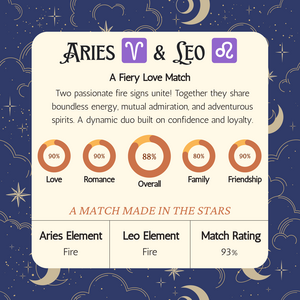
Aries and Leo - A Passionate Match Made in the Stars

Horoscope compatibility
When Aries and Leo come together, it is nothing short of electric. Both are fire signs, which means passion, energy, and strong personalities define their connection from the very beginning. This relationship rarely starts quietly. There is instant attraction, intense chemistry, and a natural understanding of each other’s desire for excitement and attention. Aries loves to lead, while Leo loves to shine. Surprisingly, they often admire rather than compete with each other. In love, they are expressive and bold. Aries brings spontaneity, while Leo adds warmth and loyalty. Together, they create a relationship full of grand gestures, adventures, and emotional intensity. Romance between them is vibrant and dramatic. Expect surprises, celebrations, and a lot of affection. However, both signs have strong egos, and when conflicts arise, neither likes to back down easily. Learning to compromise is key to making this relationship last. In terms of family life, Leo tends to be more nurturing and protective, while Aries brings energy and initiative. They can build a lively and loving home, especially if they learn to respect each other’s leadership styles. As friends, they are incredibly supportive and fun. They motivate each other to grow, take risks, and enjoy life to the fullest. Overall, Aries and Leo share a powerful connection that thrives on passion and mutual admiration. If they can manage their tempers and egos, this can turn into a deeply fulfilling and long lasting relationship.
Read Full Story →

Wedding Photography That Keeps Your Memories Alive

Wedding tips
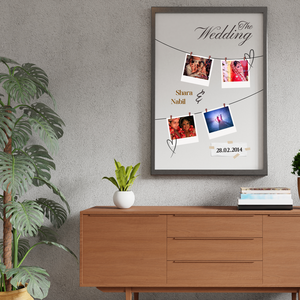
In Bangladesh, a wedding is not just a day. It is a feeling that stays with a couple for the rest of their lives. Months of planning go into outfits, venues, food, and guest lists. Yet when everything is over, what truly remains are the photographs. Every couple dreams of their wedding day in their own way. The bride imagines her walk, the groom imagines that first moment he sees her, and both imagine being surrounded by the people they love the most. But the reality is, the day passes very quickly. Between rituals, guests, and constant movement, many moments are felt but not fully seen. This is where wedding photography becomes so important. For couples in Bangladesh, weddings are full of emotions that are impossible to repeat. The laughter during gaye holud, the nervous excitement before the ceremony, the quiet glances between the couple, and the tears during rukhsati. These are not staged moments. They happen naturally and disappear within seconds. A good photographer captures these feelings so that couples can go back to them anytime. What makes wedding photography truly valuable is how personal it becomes over time. Years later, when couples sit together and look through their album, they do not just see pictures. They remember how they felt in those moments. The small details come back to life. The way the bride smiled, the way the groom looked at her, the happiness of parents, and the joy of friends. It becomes a way of reliving the beginning of their journey together. Many couples today are starting to understand this better. Instead of seeing photography as just another cost, they are treating it as something worth investing in. Because no matter how beautiful the decoration is or how grand the event feels, those things do not last. Photographs do. A good wedding photographer does more than take pictures. They understand emotions. They know when to click without interrupting a moment. They notice things that even the couple might miss in the rush of the day. That is what makes their work so meaningful. At the end of it all, when the wedding is over and life moves forward, it is the photographs that bring everything back. For a couple, they are not just images. They are memories, feelings, and the story of where it all began.
Read Full Story →

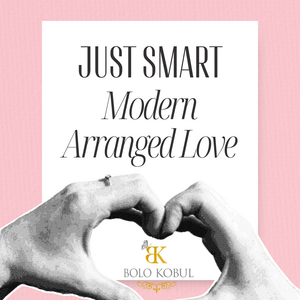
Not Old-Fashioned, Just Smart: Modern Arranged Love

Blog
Let’s get this out of the way: no, your parents’ arranged marriage isn't the outdated relic you think it is. In fact, it might be the most efficient, emotionally intelligent, and drama-free way to find a life partner in 2026. Hot take? Maybe. But when you’ve been on 37 mediocre dates, unmatched by 83 gym bros, and ghosted by three guys named “emotionally available,” you start to wonder: what if we’ve been doing this wrong? Enter: arranged marriage. But not the Bollywood version where your dad picks a stranger from the same zip code and you marry him after one cup of tea. We’re talking about the new-age, consent-first, compatibility-focused arranged matchmaking revolution. And no one is leading it better than www.Bolokobul.com. Modern Matchmaking Isn’t What You Think The words "arranged marriage" still trigger mental images of forced unions, awkward biodata exchanges, and being judged for not liking ghee. But here’s what you don’t see: Couples who skipped five years of casual heartbreak and instead asked the right questions first. People who didn’t spend months decoding mixed signals because they were too busy planning a future—together. Partners who met through matchmakers like Bolokobul, built on aligned values, and chose commitment with full clarity. It’s not just romantic. It’s radical. Dating Apps Sell You the Dream. Arranged Matches Deliver the Reality. Dating app promises “the one” is just a swipe away. Reality: endless scrolling, shallow connections, and surface-level attraction that burns out faster than a trending reel. Modern dating has turned love into a numbers game. And guess what? You’re losing. A Harvard Business Review study showed that decision fatigue in online dating leads to dissatisfaction and higher breakup rates. That’s because we treat dating apps like Netflix—endlessly browsing but rarely committing. Arranged marriage flips the script. It puts intention front and center. No swipe fatigue. No breadcrumbing. No “hey” at 2AM. Just mutual respect, clarity, and structured discovery. The Most Emotionally Intelligent People Are Choosing Arranged Matches There’s a growing class of millennials and Gen Z professionals who are quietly opting for matchmaker-supported connections. And not because they’re desperate—because they’re done wasting time. They want: • Emotional maturity • Shared values • Family compatibility (yes, it still matters!) • A life built on communication, not chemistry alone Arranged marriage isn’t regressive. It’s just rebranded commitment—the kind that filters out chaos and brings in clarity. Meet Bolokobul: The Matchmaking Platform for Smart People At Bolokobul, we’ve facilitated 100+ successful matches—not by forcing people together, but by building a process that honors both tradition and transparency. You get: • Real humans, not just algorithms • Profiles reviewed for seriousness and sincerity • Guidance in asking the hard questions early (kids? finances? long-distance?) • And support for navigating family expectations without losing yourself We’re not anti-dating. We’re just pro-intentionality. Arranged Marriage Isn’t Just Practical. It’s Romantic AF. There’s something wildly romantic about two people saying, “I choose you”—not because of a perfectly posed selfie or shared love for tacos, but because they’ve taken the time to understand each other’s lives. In a world where love is cheap and attention is currency, making a deliberate, values-aligned decision is the ultimate love story. You don’t need to fall into love. You can walk into it, eyes wide open, hand in hand.
Read Full Story →

No Need to Panic: Arranged Marriages Are Not What You Think

Blog
When the topic of arranged marriage comes up, some people might instantly feel a chill down their spine, imagining awkward conversations, forced smiles, and a lifetime of "What ifs?" But before you break into a sweat, let’s take a step back and ask—why be scared of arranged marriage? First off, arranged marriage is not about being pushed into a relationship with a complete stranger. It's more like having your own personal team of matchmakers (aka your family) who have your best interests at heart. They’re not just picking anyone off the street; they’re carefully vetting, investigating, and comparing notes, all to find someone who checks your boxes—sometimes even the ones you didn’t know you had. Think of it this way: while dating apps might match you with someone based on a quick swipe, an arranged marriage setup is like having a highly personalized algorithm, except this one includes your mom’s sixth sense and your dad’s knowledge of the extended family tree. Plus, in the age of platforms like Bolo Kobul, you get the best of both worlds—tradition and technology. You can connect with your potential partner, chat, and decide at your own pace, all with the safety net of cultural compatibility and family support. And let’s not forget, arranged marriages often come with an entire entourage of advice, support, and the occasional pep talk from well-meaning relatives. Sure, it can be overwhelming, but it’s also a process grounded in community, values, and, ultimately, love. So, why be scared? Embrace it. After all, in an arranged marriage, you’re not walking into the unknown alone—you’re stepping into a journey backed by generations of wisdom, with a little help from modern-day matchmaking magic.
Read Full Story →

The Right Age for Marriage: Balancing Tradition and Personal Readiness

Blog
Deciding on the right age to get married is a topic that often sparks lively debates, especially in a culturally rich and diverse society like Bangladesh. The "right" age can vary greatly depending on individual circumstances, societal expectations, and personal preferences. Cultural and Familial Expectations In many Bangladeshi families, there's often an expectation to marry at a certain age. For women, this might be in their early to mid-20s, and for men, it might be in their mid to late 20s. These expectations are rooted in traditions and the idea of starting a family while still young. However, it's essential to balance these expectations with personal readiness. You might get nudged by your aunties at every family gathering, saying, “You’re not getting any younger!” But remember, they're also the ones who believe ginger tea can cure anything. Educational and Career Goals Modern couples, especially in urban areas, are increasingly prioritizing education and career stability before tying the knot. Achieving certain educational or career milestones can provide financial stability and personal fulfillment, which are crucial for a healthy marriage. As you climb the corporate ladder or finish that PhD, you might hear, “Aren’t you going to settle down yet?” Just remind them, “I’m settling down… with my books and a paycheck!” Emotional and Psychological Readiness Marriage requires a significant level of emotional maturity and psychological readiness. Understanding oneself, developing emotional intelligence, and being ready to share your life with someone else are crucial factors. Financial Stability Being financially stable can alleviate many potential stressors in a marriage. Having a steady income, savings, and financial planning in place before getting married can provide a solid foundation for your new life together. You don’t need to have a mansion in Gulshan or Dhanmondi, but having more than just lint in your pockets is a good start. Societal Changes and Trends With changing societal norms, the age of marriage is also shifting. More people are choosing to marry later, prioritizing personal growth and experiences before settling down. In today’s world, it’s perfectly fine if your “engagement” is with your job or travels for a few extra years before it’s with a person. There isn’t a one-size-fits-all answer to the right age for getting married. It’s about finding a balance between cultural expectations, personal readiness, and life goals. Whether you choose to marry young or wait until you’re more established, the key is to ensure that both you and your partner are ready for the commitment. So, whether you're 25 and ready to dive into marital bliss or 35 and still exploring life, remember, it’s not about when you get married, but how ready and willing you are to make it work. After all, a well-timed marriage, much like a well-cooked biryani, is worth the wait!
Read Full Story →

CV vs. Biodata: The Tale of Two Documents

Blog
In the world of Bangladeshi matrimony, the choice between a CV and a biodata can feel as significant as choosing between pithas or mishti for dessert. While both documents aim to showcase one's qualifications and attributes, they serve different purposes in the quest for finding the perfect life partner. Let's delve into the differences, and why a CV might not cut it while a biodata reigns supreme. CV: The Corporate Resume Purpose: A CV, short for Curriculum Vitae, is a detailed document highlighting an individual's professional qualifications, work experience, and educational background. It's the go-to document for job applications, career advancements, and impressing HR managers. Context: In Bangladesh, presenting a CV for matrimony might raise eyebrows faster than you can say "dhoka pitha." While impressive career achievements are admirable, they don't necessarily translate into marital bliss. Your ability to excel in corporate boardrooms doesn't guarantee success in navigating family dynamics or cooking a perfect pot of biryani. Imagine trying to impress your potential in-laws with your proficiency in Excel spreadsheets or your knack for corporate jargon. Unless they're hiring for a CFO position, your CV might end up in the recycling bin faster than you can say "annual report." Biodata: The Personal Portrait Purpose: A biodata, on the other hand, is a personalized document that provides a snapshot of an individual's personal, family, and cultural background. It includes details such as age, height, religion, family values, hobbies, and preferences, offering a holistic view of the person beyond their professional accolades. Context: In Bangladeshi culture, marriage isn't just about two individuals coming together—it's about merging families, values, and traditions. A biodata serves as a roadmap for compatibility, helping families assess whether two individuals are a suitable match beyond surface-level qualifications. Picture a biodata as your passport to the world of matrimony—a colorful mosaic of your personality, family lineage, and aspirations. It's your chance to showcase your love for traditional ilish bhapa alongside your penchant for binge-watching Bangla dramas. Why Biodata Reigns Supreme Cultural Compatibility: A biodata provides insights into shared values, religious beliefs, and family expectations, essential considerations in Bangladeshi matrimony. Holistic Assessment: Beyond professional achievements, a biodata paints a comprehensive picture of an individual's personality, interests, and lifestyle preferences. Family Involvement: Biodatas facilitate family involvement in the matchmaking process, ensuring compatibility not just between individuals but also between families. In the realm of Bangladeshi matrimony, a biodata isn't just a document—it's a cultural artifact, a matchmaking tool, and a testament to the intricacies of familial bonds. So, leave your CV at the office, and embrace the whimsical world of biodatas on your journey to "happily ever after." In a world where love is often entwined with tradition, a biodata serves as the compass guiding two souls towards a shared destiny. So, dust off your pen, polish your storytelling skills, and let your biodata be the enchanting tale that sparks the beginning of your matrimonial adventure.
Read Full Story →
Denmohor: A Symbol of Love and Security in Marriages

Blog
Denmohor, also known as "dower" or "mahr," is a significant aspect of marriage in Bangladesh, particularly in the context of Islamic marriage contracts. It refers to the amount of money or property that the groom pledges to give to the bride as a token of his commitment and financial security for her. The denmohor serves as a form of financial protection for the bride in case of divorce or widowhood. In Bangladesh, the denmohor is often negotiated and agreed upon by the families of the bride and groom before the marriage ceremony takes place. The amount of denmohor can vary depending on various factors, including the financial status of the groom and the customs of the families involved. The denmohor holds significant cultural and religious importance in Bangladeshi society, reflecting the groom's responsibility to provide for the bride and ensuring her financial well-being. It symbolizes respect for the bride and underscores the importance of fairness and equity in marriage. Cultural Significance Symbol of Respect: The denmohor symbolizes the groom's respect and appreciation for the bride and her family. By offering a denmohor, the groom acknowledges the value and worth of the bride, highlighting her importance in the marriage. Financial Security: In many Bangladeshi families, the denmohor serves as a form of financial security for the bride. It provides her with a tangible asset that she can rely on in case of unforeseen circumstances such as divorce or widowhood. This financial stability is particularly important in a society where women may have limited access to resources and economic opportunities. Family Honor: The negotiation and payment of denmohor are often seen as a matter of family honor. It reflects positively on the groom and his family, demonstrating their commitment to upholding traditional values and fulfilling their responsibilities towards the bride and her family. Religious Significance (Islamic Perspective) Fulfillment of Islamic Obligations: In Islam, the denmohor is considered an integral part of the marriage contract (nikah). It is mentioned in the Quran as a requirement for the groom to provide a gift or dowry to the bride as a symbol of his commitment and responsibility towards her. The Quran states: "And give the women [upon marriage] their [bridal] gifts graciously. But if they give up willingly to you anything of it, then take it in satisfaction and ease" (Quran 4:4). Protection of Women's Rights: Islam emphasizes the importance of protecting women's rights and ensuring their well-being within the marital relationship. The denmohor serves as a form of protection for the bride, providing her with financial security and independence. It underscores the principle of fairness and equity in marriage, ensuring that both parties are treated with respect and dignity. Spiritual Symbolism: Beyond its practical significance, the denmohor also carries spiritual symbolism in Islam. It symbolizes the groom's commitment to fulfilling his marital responsibilities and providing for his wife's needs. It is viewed as a gesture of love, generosity, and kindness towards the bride, reflecting the values of compassion and empathy taught in Islam. While the denmohor is traditionally given to the bride at the time of marriage, modern interpretations may allow for flexibility in how and when it is provided. However, regardless of the form it takes, the denmohor remains an integral part of Bangladeshi matrimonial customs, embodying the values of commitment, responsibility, and care within marriage.
Read Full Story →

Why Be Scared of Arranged Marriage? Busting the Myths and Embracing the Journey

Blog
Arranged marriages often evoke a mixture of apprehension and curiosity. While the concept might seem daunting, especially for those unfamiliar with it, there are numerous reasons why one shouldn't be scared of arranged marriage. Let’s explore the common fears and why they might be unfounded for those living in Bangladesh or abroad. The Fear of the Unknown Myth: "I don't know the person well enough. What if we’re not compatible?" Reality: In arranged marriages today, families and individuals invest time in getting to know potential partners. There are meetings, conversations, and even dating-like experiences to ensure compatibility. It's like a well-organized job interview, but with more tea and samosas. Instance: Think of it as a social media profile—it's not just the picture; it’s about reading the bio, interests, and mutual friends. The Pressure to Conform Myth: "I have no choice in the matter. My parents are forcing me." Reality: Modern arranged marriages are a collaborative effort. Parents might suggest potential matches, but the final decision rests with the couple. It’s more of a guided introduction rather than a forced arrangement. Instance: It’s like your parents being your personal matchmakers, minus the swipe left and right. They’ve just upgraded from Facebook to real-life matchmaking! The Cultural Stereotypes Myth: "Arranged marriages are outdated and regressive." Reality: Arranged marriages have evolved with time. They now blend tradition with modern values, focusing on mutual respect, shared goals, and personal growth. It’s about preserving cultural heritage while embracing contemporary practices. Instance: Imagine combining the best of both worlds—traditional values with modern swag. It’s like having biryani with a side of sushi. The Fear of Missing Out (FOMO) on Love Myth: "What if I don’t fall in love?" Reality: Love in arranged marriages often blossoms over time. The initial connection, based on mutual respect and understanding, lays a strong foundation for love to grow. It’s not about the love-at-first-sight cliché but about building a deep, meaningful relationship. Instance: Think of it as a slow-cooked curry—flavors deepen and get richer with time, unlike fast food which is just quick and forgettable. The Concern About Family Dynamics Myth: "I’ll be marrying the whole family, not just the person." Reality: While family involvement is a significant aspect of arranged marriages, it can also be a source of support and strength. Understanding family dynamics and setting boundaries helps create a balanced relationship. Instance: Yes, it’s a package deal, but think of all the extra hands for household chores and the endless supply of homemade goodies! The Fear of Cultural and Personal Adjustments Myth: "What if I can’t adjust to the new lifestyle or traditions?" Reality: Adjustment is a part of any marriage, arranged or love. The key is open communication and willingness to understand and embrace each other’s backgrounds. This cultural exchange can enrich your life and broaden your horizons. Instance: Adjustments are like trying a new cuisine—you might hesitate at first, but once you develop a taste, you’ll love the variety it brings. The Myth of Compromise Over Happiness Myth: "Arranged marriages require compromising personal happiness for familial obligations." Reality: Healthy relationships involve compromise from both partners, leading to mutual happiness. In an arranged marriage, the support of families can enhance the couple’s happiness, providing a robust support system. Instance: It’s like sharing your Netflix account—initially, you compromise on what to watch, but eventually, you find series that you both love binge-watching together. Embracing Arranged Marriage Instead of fearing arranged marriages, view them as a different path to the same destination—a loving, fulfilling, and enduring partnership. The combination of family support, cultural richness, and modern practices makes arranged marriages a unique and viable way to find lifelong companionship. In the end, it’s not about how you met, but how you build and nurture the relationship. So, whether you’re embarking on this journey in Bangladesh or anywhere else in the world, approach it with an open heart, a positive mindset, and a dash of humor. After all, every love story is unique, and yours will be no exception.
Read Full Story →
1 3 5